Another portrait which has in the past been associated with Lady Jane Grey is currently in the collection of the Frick Art Museum, Pennsylvania. Today, the museum rightfully lists the sitter as Gabrielle de Rochechouart, Lady Lansac as there appears to be more evidence to support this identification than the sitters previous identification.
The painting depicts a lady facing the viewer’s left and painted to just above the waist. She wears a bodice of black fabric cut square at the neck with small puff sleeves, decorated with pearls. A partlet of white fabric with a small ruffle is seen at her neck, and over her shoulders the sitter wears the fur of an animal. The sitter wears a large chain of goldsmith work around her neck and pearls and suspended from this is a large jewel containing one gemstone. Pinned to the front of her bodice is a large jewel containing three gemstones and one large hanging pearl. On her head she wears a French hood constructed with the same fabric used for her fitted sleeves. Upper and lower billiaments consisting of goldsmith work and pearls are attached to the hood, and a black veil is seen hanging down the sitters back.
Nothing is known regarding the early provenance for this portrait or how the image became identified as a portrait of Lady Jane Grey. The first record I have been able to locate regarding this portrait and its one-time association with Lady Jane Grey is an auction catalouge for a sale at Christie’s Auction House, London on 28th February 1930. The portrait was listed among the vast collection of antiques and paintings from the collection of a Barnet Lewis Esq. Lewis died in 1929 and his collection was subsequently sold off at auction. The Frick painting is described in this catalouge as
Lot 94. Lucas De Heere, Portrait of Lady Jane Grey.
In a black dress, with yellow sleeves and jewel ornaments. Oil on panel – 6 ½ in. by 5 ¼ in.[1]
The description given in the catalouge differs from with what is seen in the portrait today. As listed above, the description states that the sitter wears yellow sleeves, however, when purchased by the current owner, it was apparent that the portrait had been heavily over painted during its history. Recent restoration work has taken place on the painting to remove the discoloured varnish and overpaint, resulting in the colour of the sitter’s sleeves being taken back to the original intended colour of pink.
The artist associated with the creation of the portrait, in the 1930 catalouge, is also inconsistent with the dates surrounding Jane Grey’s life. The Flemish painter Lucas de Heere (1534-1584) fled the Netherlands for England to escape religious persecution. He is first recorded in England in 1566, much later than Jane’s death in February 1554, so he is highly unlikely to have painted an authentic portrait of Lady Jane Grey.[2]
The portrait entered the Frick collection when it was purchased from the Wildenstein Galleries, New York by Helen Frick on 16th April 1931.[3] On entering the collection, the painting was installed in the Librarian’s Office of the Frick Art Reference Library. The identification of the sitter as Lady Jane Grey was immediately challenged, and the Frick portrait was compared to another identical copy once in the collection of the Duke of Sutherland at Stafford House.
This copy had been donated in 1897 to The Musee Conde by Henri d’Orléans, Duke of Aumale and along with other paintings from the Duke of Sutherlands collection had been associated with the Dutch artist Corneille de Lyon.
Corneille de Lyon was actively working in France from the 1530’s until his death in 1575. He was nationalised as French in 1547 and was employed as the painter to the king under Henry II and Charles IX. Frustratingly, de Lyon did not sign or date his work, so although this artist is widely documented within sixteenth century records, very few works can be reliably associated with his hand today. [4]
The panel surface of the portrait in The Musee Conde’s collection has been extended, at a later date to include the early inscription detailing the sitters name as GABRIELE. DE. ROCHECHOART. DAME. DE. LANSAC.[5] It was therefore decided by the curators of the Frick collection that their identical copy must also depict the same individual and not Lady Jane Grey.
[1] Christie, Manson & Woods, London. Catalogue of the Important Collection of Ancient and Modern Pictures and Water Colour Drawings: The Property of the Late Barnet Lewis, Esq, page 19
[2] Strong. Roy, Gloriana The Portraits of Queen Elizabeth I, Pimlico, 2003, page 71
[3] Fazio. Carl Vincent, Helen Clay Flick: Architectural Patron & Art Collector, University of Pittsburgh, 1998, page 36
[4] For the most up to date record of work associated with Corneille de Loyn see Dubois de Groer. Anne, Corneille de Lyon, Arthena, Paris, 2003
[5] Dubois de Groer. Anne, Corneille de Lyon, Arthena, Paris, 2003, Page 215
Until recently, I have avoided using social networking websites as I am always concerned how much personal information is, at times, unconsciously posted. To complete the creation of my website, I once again thought I would challenge my beliefs and create an account on two of the more popular networking sites as a way of promoting my articles and to connect with people who share the same interests.
If anything, social media definitely brings people together. During the month of February, it was nice to see how social media was used by many individuals as a way of commemorating the 466th anniversary of the execution of Lady Jane Grey, Guildford Dudley and Henry Grey, Duke of Suffolk.
One post from a well-known Tudor history website sparked my memory and interest about a rather ghoulish and macabre relic with a supposed connection to Lady Jane Grey. The relic discussed was the supposed mummified head of Henry Grey discovered in the Church of Holy Trinity Minories, next to the Tower of London, during the nineteenth century.[1]
Supposed Head of Henry Grey
In a book published in 1889, Reverend Samuel Kinns tells the story that apparently Henry’s body was buried in the Chapel of St Peter after his execution. However, his head was somehow smuggled out of the Tower and was buried in a vault at the Church of Holy Trinity Minories.
Kinns writes that Henry’s head was apparently discovered in 1851 by William Legge, 5th Earl of Dartmouth. Legge was inspecting the vaults of his ancestors under the church, and according to reports, he discovered a basket in a small vault near the altar of the chapel. On inspecting it, he noted that the basket was filled with sawdust, and it also contained the decapitated head of a male in a perfect state of preservation. [2]
The Church of Holy Trinity Minories was established from a nunnery that was surrendered to the Crown in 1539 during the Dissolution of the Monasteries. The land and buildings were apparently given to Henry Grey, Duke of Suffolk by King Edward VI in January 1552. The nun’s chapel then became a parish church, and by 1706 the original church had fallen into disrepair and was rebuilt using brick material. The upmost care and attention was given to keep as much of the church’s original features as possible. The church was eventually closed in 1899, and the building was eventually destroyed by bombing during World War II. [3]
Church of Holy Trinity Minories
At thirty-six years old, Henry Grey was charged with high treason and executed on the morning of 23rd February 1554 for his involvement in Wyatt’s rebellion. His final moments were documented in the book Chronical of Queen Jane and of Two Years of Queen Mary. This book was thought to have been written by a resident at the Tower of London at that time, and it provides a detailed description of Henry Greys actions when on the scaffold. What is most relevant in this description is that the writer informs us that, fortunately for Henry, his head was taken off with one stroke by the executioner. The entry stops with the fatal blow of the axe, and no other written account has survived to inform us exactly what happened to his body and head after this event.[4]
As Samuel Kinns noted in his 1898 book, it is traditionally thought that Henry’s body was buried in the Chapel of St Peter Ad Vincula within the walls of the Tower of London. The Chapel of St Peter was not only used as a place of worship for residents of the Tower, but it was also a place where the bodies of those accused of treason and other crimes could be buried in great obscurity and simply forgotten about.
Due to Henry’s high birth and status, it is thought that his body was probably buried somewhere on the left-hand side of the chancel, close to the altar, alongside his daughter and son-in-law. The altar was the focal point within a church, and people of high birth were buried close to this due to Christian belief and the hierarchy of the social order. Documentation survives to inform us that other prominent figures of high social status also executed during the sixteenth century and buried in the Chapel of St Peter were buried close to the altar.
1886 Plan Showing Probable Burial Spot For People of High Status
During restoration work on the Chapel between 1876 and 1877, the above plan, was made using contemporary descriptions to identify the most probable place of burial for some of the Tower’s most prominent victims. Henry, Jane and Guildford where all included on the above plan but, bones discovered during the work on the altar floor were not associated with any of them.
Bones showing signs of decapitation were discovered, and every effort was made to identify the specific individuals.[5] These bones were eventually re-buried under elaborate marbles slabs detailing the possible identifications of the individuals, and a large white marble slab was placed at the front of the Chancel listing the names of victims buried in the chapel whose remains where unfortunately not identified.
Final Design For Memorial Slabs Commemorating Individuals Buried in The Chapel of St Peter Ad Vincula
The only contemporary documented information regarding the discovery of the head I have been able to locate is a book written in 1851. In the same year the head was apparently discovered by William Legge the books writer, Reverand Thomas Hill, notes that
in the church is placed the head, taken from the body which evidently had suffered decapitation, although it is impossible to discover now the name of its possessor.[6]
The above quote suggests that no other information was discovered alongside the head that could be used to positively identify the male and no mention of the heads association with Henry Grey is mentioned in this book.
In 1877, the head was examined by Dr Fredrick John Mouat, the same individual who also examined the bones found in the Chapel of St Peter during the 1876 restoration. He concluded that
The head was removed by rapid decapitation during life admits of no doubt. A large gaping gash, which had not divided the subcutaneous structures, shows that the first stroke of the axe was misdirected, too near the occiput, and in a slanting direction. The second blow, a little lower down, separated the head from the trunk below the fourth and fifth cervical vertebrae. The retraction of the skin, the violent convulsive action of the muscles, and the formation of a cup-like cavity with the body of the spinal bone at the base, prove that the severance was effected during life, and in cold weather.[7]
Dr Mount appears to have been very careful in his analysis not to put a name to the individual, though he is noted to report that the head was decapitated during life and that it took at least two blows to remove it from the body.
On 17th March 1877, George Scharf, Director of the National Portrait Gallery, also viewed the decapitated head and took detailed drawings and notes in one of his sketchbooks.
Scharf is the first person I have been able to locate who actually documents the tradition that the head is supposed to be of Henry Grey, Duke of Suffolk. He also makes several notes recording the heads condition and that it was that of a person beyond the prime of his life. Scharf alsonotes the two cut marks seen at the base of the neck, but makes no mention that the two cut marks differ with the contemporary description of the execution of Henry Grey and that the signs of age are also inconsistent with the age of Henry Grey at the time of his death.[8]
Doyne Bell, a royal official who is recorded as being with Scharf at the same viewing, recalls that Scharf added ‘the arched form of the eyebrows and the aquiline shape of the nose, corresponds with the portrait engraved in Lodge’s series from a picture in the possession of the Marquis of Salisbury at Hatfield.[9]
George Scharf’s own opinions regarding the similarities between the mummified head and portrait appears to have only strengthened the claim that the head was in fact that of Henry Grey, Duke of Suffolk. The writer and artist Lord Ronald Sutherland-Gower was noted to have said that Scharf was
no better judge of an historical head, whether on canvas or in a mummified state, that ever existed.[10]
The story that the head was in fact smuggled from the Tower of London and buried within Holy Trinity Church appears to have surfaced from this. I have been unable to locate any sixteenth century reference concerning the separated burial of Henry Grey’s head and body. The only published material reporting this story appears after Scharf and others had viewed the head.
The portrait discussed by Scharf was exhibited on many occasions towards the end of the nineteenth century as a portrait of Henry Grey. The painting was engraved and published in Edmund Lodge’s Portraits of Illustrious Personages of Great Britain as Scharf notes. This book was published in 1814 and widely circulated. The National Portrait Gallery also purchased an identical copy of the same painting in 1867 which was again identified as Henry Grey.
Modern research has now identified that this painting is in fact a portrait of Robert Dudley, Earl of Leicester painted in the 1570’s, debunking Scharf’s theory.
It is my opinion that it needs to be remembered that the head was viewed and studied over one hundred years ago. Yes, these individuals where in a prominent position to make an analysis at that time, using the scientific methods known at that time. Today, with modern scientific methods, the riddle surrounding the identification of the head could possibly be solved once and for all. Though difficult to obtain, DNA testing could be attempted on the head to identify any possible connection to Henry Grey if a living descendant could be found. If a living descendant could not be found, then we do know the burial location of two of Henry’s daughters, though permission would have to be granted to allow the opening of the tombs.
According to reports, the head was supposedly buried in the churchyard of St Botolph, Aldgate in 1990. I have heard from an impeccable informant that this is not the case, and that the head is held in a safe and appropriate place, the location known to only a handful of people who need to know its whereabouts. If this is the case, then there is some possibility that this riddle could possibly be looked into further at some point in the future.[11]
[1] My sincere thanks to Claire Ridgeway of the Anne Boleyn Files for reminding me about this.
[2] Kinns, Samuel, Historical sketches of eminent men and women who have more or less come into contact with the abbey and church of Holy Trinity, Minories, from 1293 to 1893, with some account of the incumbents, the fabric, the plate, 1898, page 182-184
[3] Kinns, Samuel, Historical sketches of eminent men and women who have more or less come into contact with the abbey and church of Holy Trinity, Minories, from 1293 to 1893, with some account of the incumbents, the fabric, the plate, 1898, page 139-184
[4] Nichols, J. G, The Chronicle of Queen Jane and of Two Years of Queen Mary and Especially of the Rebellion of Sir Thomas Wyatt, Written by a Resident in the Tower of London, Llanerch Publishers, 1850, page.63-64
[5] For further information on the restoration of the Chapel and the search and discovery of the bones of executed victims see: Bell, Doyne. C, Notices of The Historic Persons Buried in The Chapel of St. Peter Ad Vincula in The Tower of London, 1877.
[6] Hill. Rev. Thomas, The History of The Parish of Holy Trinity, Minories, London, 1851, page 16
[7] Bell. Doyne. C, Notices of The Historic Persons Buried in The Chapel of St. Peter Ad Vincula in The Tower of London, 1877, page 184-185
Research into sixteenth century portraiture is a complex but fascinating subject. In many cases, the search starts with the surviving painting itself and then continues with the search for any written documentation concerning its provenance and any clues to the possible identification of the sitter.
When discussing portraits that have a history of approximately four hundred and fifty years behind them, it must be remembered that it is hard today to discover a portrait that has not been altered in some shape or form. Over the years the original painted surface of a portrait may have been repainted due to bad restoration or over cleaning. Inscriptions and coats of arms may also have been added at a later period in time, and in some cases the composition, original inscriptions and signatures may have been cut down to enable the portrait to fit in a new frame.
In the case of the Skeffington portrait, much of the above has happened. This portrait has also been identified as at least four separate individuals during its modern recorded history. Three out of the four sitters suggested have all faced execution, and today the portrait is now identified as an unknown lady.
Our first documented record regarding this portrait’s survival is a book in the collection of the Society of Antiquaries, London. This book contains copies of minutes of meetings held by the society during the nineteenth century and records that a portrait thought to depict Lady Jane Grey was presented to the Society by Sir William Skeffington on 6th February 1806.[1]
The portrait presented depicts a lady, seen to just below the waist and facing the viewer’s left. Both hands are clasped in front of the sitter, and four gold rings can be seen on her fingers. The sitter has grey eyes and auburn hair that is parted in the middle. On her head, she wears a French hood constructed of crimson and white fabric with both upper and lower billaments of goldsmith work. A black veil is also seen hanging down from the back of the hood, and under this she wears a gold coif. A black loose gown with a fur collar and mutton leg sleeves is worn by the sitter and is fastened to the waist. Under this the hint of a crimson kirtle is seen, and at her neck and wrists the sitter wears a figure-of-eight ruff which is embroidered with red thread. The lady also wears a pendant of goldsmith work containing three square cut gemstones and three pearls suspended at her neck. She is depicted in front of a plain background, and the image is painted on wooden panel.
Sir William Farrell-Skeffington adopted the Skeffington name in 1786 and inherited the fifteenth century manor house Skeffington Hall in East Leicester. Prior to his death he began to sell objects off from the estate and eventually sold the house, land and contents in July 1814.[2]
Skeffington presented the painting for sale to the Reverend John Brand, Secretary of the society of Antiquaries. He informed the Society that the portrait represented Lady Jane Grey and was painted by Lucas de Heere. No information is provided in the minutes of this meeting to inform us why Skeffington thought the portrait was a depiction of Lady Jane, and no information concerning the paintings provenance was recorded. It appears that Mr Brand immediately challenged Skeffington’s identification as a painting of Jane Grey, noting that a fragment of an inscription can be seen on the top left-hand side of the panel surface which identified the date that the portrait was painted as 1560. Brand rightfully recalled that the date painted on the surface did not coincide with the death of Lady Jane Grey and suggested that the portrait must in fact represent Jane’s mother Lady Frances Brandon, with Brand noting that she died in 1563.[3]
One possible reason for the misidentification as a portrait of Lady Jane Grey is the inscription seen on the right-hand side of the panel surface. This inscription reads ‘Rather deathe / than false of Faythe,’ which suggest that the sitter depicted would rather die or may possibly have died as a result of religious conflict. The inscription itself appears to have been painted in a slightly different shade of yellow than the other one detailing the year and artists initials on the left side. This suggests that one of the inscriptions was possibly added at a later date, though scientific testing would be required to establish if this theory is correct.
There is a popular tradition that Queen Mary offered Jane a pardon if she was willing to convert to Roman Catholicism. The tradition appears to have emerged shortly after Jane’s death as a way for Protestants to promote Jane’s dedication to the Protestant cause even when faced with death. There is no surviving evidence to document that Jane was ever offered an actual pardon if she would convert, but there was indeed an effort made to get her to convert
Jane was visited by John Feckenham, Queen Mary’s personal chaplain, on 8th Feburary 1554. By this point in her story, Jane had faced trial and had been convicted and sentenced to death as a traitor for accepting the crown and signing herself as queen. Mary was prevented from issuing a pardon because the Spanish demanded that Jane die as a condition of the marriage between Mary and Philip of Spain. Her execution had originally been set for the following day. Mary was able to try to save Jane’s immortal soul, however, and she sent Feckenham to see Jane with that specific task, to try and convert Jane to Catholicism prior to her death.
Jane’s execution was postponed for three days, and a debate was had between Feckenham and Jane which resulted in Jane staying strong to the Protestant faith rather than relinquishing it. This debate was recorded and apparently signed in Jane’s own hand. Within months of her death it appeared in printed format, along with a letter written by Jane to her former tutor Thomas Harding in which she condemned him for his change to Catholicism, thus promoting Jane’s strong belief in the Protestant faith. In 1615, a pamphlet entitled ‘The Life, Death and Actions of The Most Chaste, Learned and Religious Lady, The Lady Jane Grey’ was published in London. This pamphlet contained a copy of the earlier printed debate and it was noted in the introduction that:
Even those which were of the best fame and reputation, were sent unto her to dissuade her from that true profession of the gospel, which from her cradle she had held. Each striving by art, by flattery, by threatening’s, by the promise of life, or what else might move most in the bosom of a weak woman.[4]
It is quite possible that the inscription seen on the right-hand side of the portrait and the myth that Jane had been offered the promise of a pardon if she was willing to change her faith led Skeffington or a previous owner to believe that the painting must in fact depict Jane Grey.
The Skeffington portrait was purchased by the Society of Antiquaries and remained in their collection where it was last recorded in 1847.[5] How the portrait left the Society remains a bit of a mystery, but it was officially recorded as a ‘missing painting’ in one of the more recent publications on its collection.[6]
As discussed above, the portrait disappeared sometime after 1847, but it reappeared again in 1866 when it was exhibited as a painting of Anne Askew in the National Portraits Exhibition from the collection of a Reginald Cholmondeley.[7] Reginald Cholmondeley’s principal estate was the sixteenth century Condover Hall in Shrewsbury. On his death the contents of the Hall were sold at auction on March 6th 1897. The identification of the sitter appears to have changed once again, and by 1897 the portrait was then referred to as:
Item 43. Lucas de Heere, Queen Mary (of Scots), in black with pink-edged ruff and cuffs, cap with gold chain and jewelled badge. Inscribed “Rather Deathe than false of Faythe,” dated 1560.
The portrait was purchased at this auction on behalf of Wilbraham Egerton, Earl Egerton, brother-in law of Reginald Cholmondeley, and was then displayed at Tatton Park. In 1958 Tatton Park and its contents were bequeathed to The National Trust by Maurice Egerton, 4th Baron Egerton of Tatton, and the portrait remains on exhibition there today.
It is my opinion that until scientific investigation has taken place on this portrait to establish if the inscriptions are original or added later then the true identity of its sitter may continue to be unknown. The portrait is currently listed today on The National Trust collections website as an Unknown Lady, called Anne Askew. As discussed in detail in other articles on this website, the size of the ruff worn by the sitter and the date inscribed on the left- hand side are both inconsistent with the date of both the deaths of Jane Grey and Anne Askew. The Skeffington portrait can now be removed from the list of any potential likenesses thought to depict Lady Jane Grey
[1] Proceedings of the society of antiquaries of London, volume 1, page 47
[2] A large fifteen-day sale of the contents of Skeffington Hall commenced on 11th July 1814. William Ferrell-Skeffington moved to London that same year however died less than a year later on 26th January 1815
[3] Proceedings of The Society of Antiquaries of London, vol 1, page 47. John Band appears to have inaccurately listed the date of Frances Grey’s death. Frances died on 20th November 1559 and not 1563 as listed in these minutes. One interesting point is that John Brand also owned a portrait thought to depict Lady Jane Grey. The portrait sold on his death at Stewards Auctions, Piccadilly on June 23rd 1807. It was purchased by the book collector Richard Heber Esq for the sum of eight pounds. No portrait described as Lady Jane Grey appears in the sales catalogues of Heber’s collection.
[4] The Life, Death and Actions of The Most Chaste, Learned and Religious Lady, The Lady Jane Grey, Printed by G. Eld for John Wright, 1615, page 22
[5] Electronic communication, Lucy Ellis, Museums Collections Manager, Society of Antiquaries, September 2018
[6] Franklin. J. A, Catalouge of Paintings in the Collection of The Society of Antiquaries of London, 2015, page 411-412
[7] Catalogue for the 1866 National Portrait Exhibition page 21. Anne Askew was burnt as the stake as a heretic in 1546 for refusing to acknowledge that the sacrament was the ‘flesh, blood and bone of Christ’.
During a recent visit to the Heinz Archive in London, I came
across a collection of letters written in 1917 concerning a portrait of Lady
Jane Grey. All three letters were
addressed to James Milner, the then director of the National Portrait Gallery
and were written by a R. Brocklebank of Houghton Hall in Cheshire.
Upon locating these I instantly thought, “great, I have
another new portrait search to get my teeth into.” Sadly, it turns out that the actual painting
was sitting right under my nose all the time, and all I had discovered was some
new provenance information regarding a portrait already known to us.
R. Brocklebank, or Ralph Brocklebank as he is better known,
was a wealthy shipowner and art collector who purchased Houghton Hall in the
nineteenth century and had it rebuilt between 1891 and 1894 to house his
valuable collection of art. In his first
letter written on 27th July 1917, Brocklebank reports ownership of a
portrait thought to depict Lady Jane Grey and suggests that he would like to
leave it on his death to the gallery. He
reports that he purchased the painting from a picture shop on Bond Street in
1892 and requests a meeting during his next visit to London so the gallery
could view the portrait themselves.
Brocklebank also informs the gallery that his portrait is oil on panel,
measuring 10 x 7 ¾ inches, and is thought to be by the school of Clouet. A photograph of the actual painting is also
supplied with the letter, but this was no longer stored with the documents in
the archive.[1]
Fortunately, Ralph Brocklebank had a book published in 1904
documenting his collection of over 150 paintings and engravings held at
Houghton Hall. Within this book is a
portrait referred to as representing Lady Jane Grey by the school of Clouet. Item number 39 is discussed and a detailed
description of the painting is also given.
Portrait of Lady Jane Grey
School of Clouet
Portrait (bust) of Lady Jane Grey, with face turned to
the right. She is handsomely attired in
the fashionable costume of the period. A high, close-fitting ruff reaches to
her ears, entirely concealing her neck.
Her hair is pulled back from her forehead, and covered by a jewelled
net. The collar of her elaborately
braided doublet reaches as high as the ruff, and spreads out on either side,
showing a gold collar, heavily gemmed, from which a large jewelled pendant hangs
on her breast. A portrait in The
National Portrait Gallery, by Lucas de Heere (No. 764) confirms the truth of
this likeness.[2]
It appears that the portrait remained in Broclebank’s
collection until his death in 1921. No
documentation has been located within The National Portrait Galleries archives
to identify that his portrait was left to the gallery upon his death, as
suggested in his first letter, and it may be possible that upon viewing the
actual portrait it was decided that it was not something the gallery wanted in
their collection. The portrait again
appears in 1922 in the Christie’s auction catalouge for the sale of Ralph
Brocklebank’s collection, but rather than
being described as a portrait of Lady Jane Grey as seen in the earlier
book, it is referred to as a portrait of a lady said to represent Lady Jane
Grey. This suggests that the gallery may
have informed Brocklebank that the painting may not represent Lady Jane Grey in
the first place.
Portrait of a Lady
(Said to represent Lady Jane Grey)
In white dress, with high collar and
linen ruff, richly jewelled necklace and head-dress
On completion of the sale, the portrait
was purchased by a E. Brock for the sum of £28.8 shillings and thus, I thought
the trail ran dry.
When discussing the various portraits
associated with Jane Grey, one of my main goals is to locate an image of the
portrait so that the painting can actually be seen by the person reading this
article. Unfortunately, in some cases a
photographic image may not have been taken or, as with the Brocklebank portrait,
the image may have been lost during the passage of time. Many thousands of photographs of portraits
are held within the various boxes at the Heinz archive, and it would literally
be like attempting to find a needle in a haystack when looking for the missing
Brocklebank photograph. In all honesty I
had come to terms with just adding this particular portrait to the Auction/collections
page on this website. I did, however,
manage to find the photograph, and as discussed above it had been sitting under
my nose all the time.
After reading Carter’s 1904 description
and attempting a frantic internet search in the hope of a portrait matching
this, it suddenly came to mind that I had seen this painting before. It is discussed in Stephan Edward’s book A
Queen of a New Invention Portraits of Lady Jane Grey as the Taylor
portrait. Edwards concludes that this
image is unfortunately not a portrait of Lady Jane Grey, but a portrait
probably of Elizabeth of Austria and that the provenance discussed in the 1998
sales catalouge for this painting contributed nothing useful.[4] As Edwards reports, this portrait was sold by
Christie’s, London on 12th November 1998 and was described in the
catalouge as a portrait of a Lady, previously identified as Lady Jane Grey. The catalouge also records that the portrait
was once in the collection of A.M and B Taylor, but nothing more is mentioned
regarding the provenance for this image during the sale.[5]
Upon accessing my own file on the Taylor
Portrait, I came across a photocopy of an old image of the portrait located in the
artist box for Francios Clouet at Heinz Archive. Over the years, the gallery have used the
back of this image to scribble various notes regarding the portrait in pencil
and seen in the centre of this is writing made in ink identifying the sitter as
supposed to be Lady Jane Grey, written in the same handwriting as the letter
from Ralph Brocklebank.
It appears that this is the lost photograph which
accompanied the Brocklebank letters sent to James Milner in 1917 and though
most definitely not a portrait of Lady Jane Grey these letters do provide more
provenance for this painting and its one time association with her.
[1]
Heinz Archive, NPG 104/8/2, Correspondence Received 1917, accessed July 2019
[2]
Carter. R. Radcliffe, Pictures & Engravings at Houghton Hall Tarporley in
The Possession of Ralph Brocklebank, 1904, Item 39. My sincere thanks to the staff at the library
of the University of Dundee for assisting me with gaining access to this book.
[3]
Christies Auction Catalouge, 7th July 1922, lot 80. My sincere thanks to Simona
Dolari of Christie’s auction house for providing me with the information
regarding this sale.
[4]
Edwards. John Stephan, A Queen of a New Invention Portraits of Lady Jane Grey,
Old John Publishing, 2015, page 99
[5]
Christie’s Auction Catalouge, 12th November 1998, lot 4
After
watching the recent channel 5 television programme ‘inside the Tower of London’
that focused on the story of Lady Jane Grey, I noted that the famous Dudley
carvings on the walls of the Beauchamp Tower were discussed as part of the
programme. Not discussed within this
interesting documentary were the two other carvings associated with Jane’s
story also carved into the walls of the same room.
In 2018, I finally got the chance to visit the Tower of London as an adult. Upon seeing the two small carvings in the Beauchamp Tower in person, I was instantly struck with an air of sadness. To me, these two carvings symbolised so much of the history that had interested me for most of my life, and I knew so little about them. Over the years, my interest in the story of Lady Jane Grey has led me to read a lot of printed material about her. I was aware of the survival of the carvings, though I had read very little about the history that surrounds them.
My initial thought had been that the inscriptions had always been known about and that the tradition that they were associated with the story of Jane Grey had travelled down through the centuries. This in turn prompted me to dig a little deeper in the hope of gaining a better understanding.
The aim of
this article is to establish what is known about the two IANE inscriptions and to
document some details regarding the history of these important artefacts, as so
little has been written about them since their discovery.
During my
research for this article I have been unable to locate any reference regarding
the two carvings of Jane’s name prior to the eighteenth century. According to John Foxe’s Acts and
Monuments, first published in 1563, Jane was supposed to have written the
following two verses into the wall of her apartment with the use of a hair pin.
“Do never think its strange,
Though now I have misfortune,
For if that fortune change,
The same to thee nay happen.”
“If God do help thee,
Hate shall not hurt thee;
If God do fail thee,
Then shall not labour prevail thee.”
Fox makes no
mention of any other carvings showing Jane’s name within the walls of the Tower
of London in his book. Various searches
over the years have been made at the Tower in the hope of locating the above
inscriptions noted by Fox, but the house in which Jane is recorded as being
held was demolished in the eighteenth century. It was replaced with the existing building
today which stands between the Queens House and the Beauchamp Tower.[1]
The two inscriptions
were first discovered in 1796. During this period, the upper room of the
Beauchamp Tower was being converted for the use of officers of the garrison. Prior to this, the room had been used for
domestic use, and the walls had been plastered over and painted, thus eliminating
any traces of earlier inhabitants.
During the
renovations, the plaster was removed from the walls, which in turn revealed a
large number of inscriptions etched into the stonework. On discovery of these, it was immediately
noted that a lot of the carvings where associated with prominent figures in
history who had been imprisoned within this room at the tower.
Reverend
John Brand, Secretary to the Society of Antiquaries, was the first to discuss
the carvings in a meeting held on 17th November 1796. Notes from the meeting were published in the Archaeologia
Journal in 1800, and this also gave us our first visual view of the
inscriptions found.
Within this
meeting, Brand discussed the discovery of the inscriptions, referring to them
as ‘undoubted autographs made at different periods.’ Brand was also noted to
firmly claim that the IANE inscription was made by Lady Jane Grey herself, reporting
that this had been done ‘as a statement that not even the horrors of prison
would force her to relinquish her title as queen.’[2] This in turn led to a number of artists
creating images of Jane either making the inscription herself or depicted
within the room containing an inscription of her name.
It is not
known how or why Brand had come to this conclusion as the exact place in which
Jane was housed when prisoner at the Tower was documented within the Chronical
of Queen Jane and of Two Years of Queen Mary. This book was thought to have been written by
a resident at the Tower of London who notes that Jane was imprisoned in
Partridge’s House and not the Beauchamp Tower. [3]
This claim
was eventually corrected with the publication of a book in 1825 by John
Bayley. In this, Bayley discussed the
fact that Lady Jane herself was imprisoned in the house of the Gentleman Gaoler
on Tower Green, also known as Partridge’s House. He reports that due to this, the inscriptions
could not have been made by her hand, noting that it’s highly unlikely that
Jane would have been allowed to spend time in the prison cell allotted to her
husband. Bayley then suggests that the
inscriptions were actually made by Guildford Dudley himself or one of his
brothers in memory or honour of Jane Grey.[4]
It is
Bayley’s theory that sticks today. It
could be argued that if the inscription was made by one of the Dudley brothers,
then it might not in fact represent Lady Jane Grey but their mother, who was
also called Jane Dudley. The face that
two inscription of the same name survives may represent the two Jane’s within
the brothers lives, though it is up to the individual viewer to decide.
[1]
Treasures of the Tower Inscription, Her Majesty’s Stationary Office, page 14
[2]
Brand. John, An Account of The Inscriptions Discovered on The Walls of An
Apartment in the Tower of London, Archaeologia, XIII, Page 68-91
[3] Nichols, J. G, The Chronicle of Queen Jane and of Two Years
of Queen Mary and Especially of the Rebellion of Sir Thomas Wyatt, Written by a
Resident in the Tower of London, Llanerch Publishers, 1850, page.25
[4]
Bayley, John, History and Antiquities of the Tower of London, 1825, page.162
One of the lesser known and in some cases forgotten characters
in the story of Lady Jane Grey is her husband Lord Guildford Dudley. Various articles have been written on the iconography
of Lady Jane Grey and the numerous portraits thought to depict her. Almost nothing has been written relating to
the iconography of her husband, which is why I have decided to write and include
this article on this website.
As discussed in previous articles, a small number of
portraits held in private collections have been associated with Lord Guildford
Dudley over the passage of time. During the research for this article, I have
so far been unable to locate any sixteenth century references to a portrait of
Lord Guildford Dudley being held in collections.
The first documented reference located so far to a portrait
of him appears in 1820, a portrait sold by a Mr Bullock of London. This was formerly in the collection of a Mr
David Holt Esq of Manchester, and the catalogue for the sale describes the
painting as being by a Sir A. Mor. The entry for the lot is as follows:
“A portrait of lady
jane Grey and Lord Guildford Dudley in one frame, the latter portrait is the
only one known to exist of Lord Guildford”[1].
This portrait was again sold in 1833 and has now disappeared
from the historical record.
As with Lady Jane Grey, so little is known about her husband. His story has been embellished and exaggerated to enable writers to make the character of Jane Grey appear vulnerable to the manipulation and bullying by others that surrounded her. His story, like that of his wife, has been surrounded by myths with little known today of the actual person.
Similar to his wife, there is no date recorded to inform us of
the exact date on which Guildford Dudley was born. Traditionally, his year of birth has been
recorded as either 1534 or 1536, but recent research produced by Susan Higginbotham
suggests that he may have possibly been born between 1537 and 1538, thus making
him the same age as Jane Grey or possibly younger.[2]
We also have no detailed description as to what Guildford
Dudley looked like. As discussed in
previous articles, the description given by Richard Davey detailing Guildford’s
features as he entered the Tower of London with Jane as queen in 1553 has today
been proved to be an invention by the author. We are simply left with vague references to
him being “handsome” by his contemporaries which give us nothing in terms of
his physical features.[3]
The aim of this article is to look at the portraits that
have been associated with Lord Guildford Dudley in the past in the hope of
establishing if there is any possibility of any of these being a genuine image
painted from life. Where possible I have
included what is known about the provenance of the image in the hope of
establishing some documented order.
Our first portrait appears publicly in a book published in
the early twentieth century entitled “The Tower of London” by Ronald Sutherland
Gower. Traditionally identified as Lord
Guildford Dudley, this painting has for many years been displayed alongside
another thought to represent his wife Lady Jane at Madresfield Court in Malvern,
Worcestershire. Both portraits have been
in the collection of the Earls of Beauchamp since the early nineteenth century.
Neither portrait is an authentic likeness. The portrait thought
to represent Lady Jane Grey is discussed in detail by John Stephan Edwards, and
it is concluded within his article that the artist who painted the portrait
intended it to be a representation of Mary Magdalene and not Jane Grey.[4]
The portrait thought to represent Lord Guildford Dudley
shows a male figure standing to the viewers left with his righthand on hip and
his left hand resting on his sword. He wears a light-coloured doublet with high
standing collar and a large figure-of-eight ruff. The sitter has dark hair and wears a black
bonnet that includes goldsmith work and two feathers within its
decoration. He is depicted in front of a
dark background and in the top left-hand corner is an inscription which reads
1566 Æ SVÆ, 20.
The first questionable aspect of this painting is the
inscription. This is inconsistent with the known facts of Guildford Dudley’s
life and is dated to some twelve years after his execution in 1554. It is not truly known how this image became associated
with Guildford, though it appears that whoever suggested the identity did not
know the year in which he died. The
date is also inconsistent with the costume worn by the sitter, particularly the
large circular ruff seen at his neck and the hat worn by the sitter. This style of ruff dates to the later period
of Queen Elizabeth’s reign and is seen in many portraits painted during the
1580’s. During the 1560’s the smaller
figure-of-eight ruff which generally surrounded the face was in common use. This again suggest that the inscription
itself was probably added later and that this painting was not meant by the
artist who created it to be a representation of Lord Guildford Dudley.
It is highly likely that Guildford’s name was associated with this portrait with little reason behind it. Nothing is seen within the painted image to establish that this portrait was ever painted from life or was ever meant to be a depiction of Lord Guildford Dudley.
Named in this article after its current location, this portrait is now in the collection of The National Trust at Tyntesfield House, though it is not currently on display.
This image depicts a young gentleman with blonde hair, painted three-quarter length and facing the viewer’s right. He is wearing a black hat with a yellow feather, a black doublet embellished with gold, and a dark fur overcoat with yellow sleeves. The sitter’s right hand is resting on a sword that is attached to his hips.
This portrait was purchased as a painting of Guildford
Dudley by George Adraham Gibbs, 1st Baron Wraxhall (1873-1931). On his death it passed to his son Richard
Lawley Gibbs, 2nd Baron Wraxhall (1922-2001) and was subsequently
purchased by the National Trust in 2002.[5]
The National Trust collections website describes this
painting as being both British made and created using oil on paper applied to
panel. It is also noted to report that
the portrait is probably nineteenth century in origin. Though no scientific
investigation has taken place on this image to establish a date of creation,
the style of the painting is more consistent with nineteenth century techniques
than that of sixteenth century techniques.
Until a firm date of creation can be established, It is more than likely that this portrait is an imaginary image of Guildford Dudley rather than a sixteenth century painting painted from life or based on a pre-existing image.
The third and final portrait is the more interesting of the
three, due to it being exhibited publicly on at least two occasions as an image
of Guildford Dudley. This portrait was also used by the artist Richard Burchett
in 1854 as a basis for his depiction of Lord Guildford Dudley when producing
the images of the royal Tudor figures for the Prince’s Chamber’s in the Palace
of Westminster.[6]
The original painting once again shows an image of a young
gentleman, painted three-quarter length and holding a pair of gloves in his
right hand, with his left hand on his hip.
The sitter wears a black doublet with large white sleeves, embroidered
with gold thread. Placed over his right
shoulder, is a cape of dark fabric with fur and at his neck is a large circular
ruff.
The earliest documentation regarding this image is the exhibition catalogue for the Art Treasures Exhibition of 1857 held in Manchester. The portrait is described in the catalogue as
item 383. Lord Guildford Dudley from the collection of Col
North MP[7]
The painting again appears in the National Portrait
Exhibition held at the South Kensington Museum in April 1866 where a
description was given
Item 191. Lord Guildford Dudley. Colonel and Baroness
North – Half-length, small life size, ruff, doublet and surecoat black with
dark fur, white gold-embroidered sleeves, gloves in r hand. Panel 14 x 11
inches.[8]
The Colonel North MP listed as the owner of the painting is John North, also known as John Doyle, of Wroxton Abbey. Wroxton Abbey is a seventeenth-century manor house and was the home of the Pope and North family from 1677 until 1932, when it was leased to Trinity College. A sale was held of the contents of Wroxton Hall in May 1933 that included the portrait of Guildford Dudley matching the description of the portrait which appeared in the National Portraits Exhibition catalogue, displayed in the Garden Parlour.
Item 690. Small portrait on panel of Guildford Dudley,
holding gloves in right hand. Believed
to be the only known contemporary portrait.[9]
What is seen from the image of the portrait is that once
again the sitter is wearing a costume that dates to the 1580’s rather than what
would have been worn by Guildford Dudley during his lifetime. Richard Burchett also appears to notice this
when creating his image of Guildford for the Palace of Westminster and has
adapted his image to fit with a more consistent costume that Guildford would
have worn.
On completion of the Wroxton Abbey sale, the portrait then
passed into a private collection though was subsequently sold again at auction
on 29th September 1993.
As far as I am aware the three portraits discussed above are
the only known portraits associated with Lord Guildford Dudley. As this article shows none contain any clues
in favours of the sitter being positively identified as him and so Guildford
Dudley remains faceless.
[1]
Catalogue of pictures of David Holt Esquire of Manchester, 14th July
1820
Previously Called Lady Jane Grey Watercolour on Ivory 45mm
On 25th April 1912, Prince Frederick Duleep Singh
visited Ketteringham Hall in Norfolk.
Singh visited a large number of properties across Norfolk where he
documented the art collections seen and published a book in 1927 detailing his
findings. In the book, entitled
Portraits in Norfolk Houses, Singh recorded a portrait thought in 1912 to
represent Lady Jane Grey.
Ketteringham Hall was built in the fifteenth century and was
home to Henry Grey of Ketteringham. By
1492 the property had passed to the Heveningham
family. It was purchased in the nineteenth century by John Peter
Boileau, archaeologist, Vice-President of the Society of Antiquaries, London,
and collector of antiquaries. The hall
was dramatically remodelled during the
nineteenth century when it was purchased by Boileau to house his vast
collection of antiques and collectables.
In the past and today, Ketteringham Hall has laid claim that it was once the childhood home of Lady Jane Grey, and it is only fitting that it should have housed a portrait of her. As discussed above, the house was no longer in ownership of the Grey family during the sixteenth century, and there is no documented evidence to state that Jane Grey ever visited the property.[1]
At the time Prince Frederick Duleep Singh visited the
property, it had passed by descent to Sir Maurice Colborne Boileau, grandson of
John Peter Boileau. The Hall would eventually be used as an active US Air Force
base, and by 1948 the family opted to sell Ketteringham off, when it was then
purchased by the Duke of Westminster.
Singh provides a detailed description in his book of the
portrait thought to depict Lady Jane Grey seen in 1912. The entry reads as follows.
Lady Jane Dudley, H(ead) and S(houlders). Body, face and
blue eyes all turned towards the sinister (viewers left), fair hair parted and
flat, roll over each ear, and small row of rolls over the head, black cap on
the head falling at one side and behind. Dress: black with white fur round the
neck and down the front, also on each side of the arms. Blue background, min(iature)
square. Age 18.[2]
No other information concerning this portrait has surfaced, and
it appears never to have been exhibited as a portrait of Lady Jane Grey. The painting was initially thought to be lost due
to the contents of Ketteringham Hall being sold off over the years at auction.
During his own research into the many portraits thought to depict Lady Jane Grey, John Stephan Edwards was the first to acknowledge and create awareness of the Ketteringham Hall portrait in modern times. He briefly discussed it in the appendix of his book concerning lost portraits once thought to be Jane Grey. Edwards compared Singh’s description of the painting to a portrait also thought to depict Lady Jane Grey at the Bodleian Library, Oxford. He expressed uncertainty as to whether the portrait was still at Ketteringham Hall today.[3]
Further research into the Ketteringham Hall portrait completed
by myself suggests that it was actually sold in 1947. By this point the
portrait had lost its identity and no connection was made at that time that the
portrait was ever thought to depict lady Jane Grey.
In 1947, a large four-day auction took place of the contents
of Ketteringham Hall. It is highly likely that the portrait once seen by Singh
and given a detailed description in his book as a portrait of Lady Jane Grey was
sold on the first day of sale as part of one lot containing three items.
Lot 357. Miniature, Lady with a white lace collar, ditto fur
collar and silhouette.[4]
It appears that this lot was purchased, along with several
other lots from the 1947, sale by Rev William Hall and his son Bryan Hall. Both father and son were avid collectors of
antiques and frequent visitors to sales of county house collections. Bryan Hall would eventually acquire a large
collection of more than 2,200 antiques during his lifetime and all where held
within his home of Banningham old Rectory, which on occasions he would open for
public viewing.
The miniature portrait remained in Hall’s collection until 2004. By this point, the elderly Bryan Hall put his entire collection up for auction, facilitated by Bonham’s Auctioneers. This consisted of a three-day sale of the contents of Banningham Old Rectory. The Ketteringham Hall portrait, along with another miniature close in comparison to the 1947 catalogue description of ‘a woman in a lace collar, and a large quantity of silhouettes were sold during this sale. The provenance for these items could be traced back to Ketteringham Hall.[5] Lot 89 of the Bonham’s sale is of particular interest when looking at the lost Ketteringham Hall portrait of Lady Jane Grey. It is referred to in the catalogue as
Lot 89. Bernard Lens III (1750/6-1808), A portrait of a lady dressed as Mary Queen of Scots, in
black dress slashed to reveal white fur, pearl necklace and black cap Water
colour on ivory rectangular 45mm, in a gilded wood frame.[6]
Though the provenance for lot 89 was not fully documented in the auction catalogue, Singh’s description was included in the literature accompanying the lot. The auction house commented that this portrait does not conform to other known portraits of Lady Jane Grey and lists the sitter’s identity as Mary Queen of Scots.
When comparing Singh’s description to the photograph of lot 89, there does appear to be a match. If this picture is the lost Ketteringham Hall portrait, then this brings about the question as to why an eighteenth-century portrait of Mary Queen of Scots became known as Lady Jane Grey by 1912.
NPG764 Previously Called Lady Jane Grey Oil on Panel (c)NPG
One possible reason for this is the purchase of NPG764 by
the National Portrait Gallery, London.
By 1912, this was being exhibited as a portrait of Lady Jane Grey, and
this does share some similarities in style and composition to the Ketteringham
Hall portrait. It may just be possible
that the Boileau family or Singh himself concluded that, due to the
similarities, the portrait at Ketteringham Hall must also depict Lady Jane
Grey. During the early 20th century, several books were written and
published concerning the iconography of Mary Queen of Scots, including one
written by Lionel Cust, who briefly discussed the similarities in costume
between both images.[7]
The portrait on which the Ketteringham Hall image is based
was widely copied during the eighteenth century as an image of Mary and would
generally be referred to as the Okney type by art historians. It appears that the copy produced by Bernard
Lens in vast quantities was based on a sixteenth century miniature portrait
once in the collection of the Duke of Hamilton prior to 1710.
George Vertue discussed this in his notebooks, having seen
the original miniature in person.
“This duke of Hamilton
that lived at the manor house at East Acton had great collections of Indian
work and china and many curious limning portraits some of them excellent and
rare in number about fifty or sixty… so many as was exposed to sale in
1745. No. 28 Mary Qu. Scots, this is the
original limning which the Duke of Hamilton had recovered and valued most
extremely – showed it at court and everywhere for a true genuine picture of the
queen everywhere from thence it was copied in water colours enamel many and
many times for all persons pining after it thousands of illuminated copies – spread everywhere – this picture
itself – tho amended by or repaired by L. Crosse who was ordered to make it as
beautiful as he could – by the duke.
Still is a roundish face not agreeable to those most certain pictures of
her – but his attestation of its being genuine, later part of Qu. Anns time it
took and prest upon the public in such an extraordinary manner”[8]
The fact that Vertue himself expressed doubt in the eighteenth century as to whether the original miniature portrait was a representation of Mary Queen of Scots is interesting and today doubt as to the true identity of the sitter continues.
Called Mary Neville, Lady Dacre Watercolour on Vellum Size Unknown
The above image was sold through Phillips Auctions of London, on 10th November 1998 and was associated with the court painter Levina Teerlinc. Painted on vellum and applied to card, a faint description on the back was recorded in the auction catalogue identifying the sitter as “Queen Mary”. The painting was officially sold as a portrait believed to be that of Mary Neville, Lady Dacre, with the auction house noting similarities to other known portraits of this sitter.
The provenance for this miniature is recorded as being in
the collection of the Duke of Buckingham at Stowe house. It appears in the 1849 sales catalogue were
it was again described as a portrait of “Mary Tudor, Queen of England”[9]. The portrait was then purchased by John Webb
who was a prominent collector of antiques in the mid nineteenthcentury
and on his death in 1880, it then passed to his daughter Edith Webb and was eventually
sold at Christie’s Auction, London, on the 24th June 1925.
When looking at this miniature it does appear to be too much
of a coincidence to suggest that the similarities to the Okney Type is purely
chance. The similarities between this portrait
and early copies made by Bernard Lens are exceedingly close, though Lens’s
later copy has been altered to portray a younger and thinner sitter and some
slight differences are seen with the gold coif worn under the hood. Due to the similarities seen it is my opinion
that this may just be the original miniature owned by the Duke of Hamilton and
reported by George Vertue to have sold in 1745.
The fact that the Teerlinc miniature also includes an early
inscription identifying the sitter as “Queen Mary” does give this opinion some
back up. It may just be possible that
the identification as to which Mary it was meant to represent may have just got
lost during its history. What is for
certain is that the Teerlinc miniature neither represents Mary Tudor or Mary
Queen of Scots and the similarities to portraits of Mary Neville as discussed
in the auction catalogue is striking.
The ketteringham Hall portrait most certainly was created during the eighteenth century and therefore cannot be a portrait of Lady Jane Grey painted from life. The portrait was originally painted as an image of Mary Queen of Scots that was mislabelled by 1912 when seen by Prince Frederick Duleep Singh. This can now be removed from any list of potential likenesses of Lady Jane Grey.
[2]
Singh. Prince Frederick Duleep, Portraits in Norfolk Houses, Jarrold and Sons,
Ltd, Vol I, Page 361
[3]Edwards.
John Stephan, A Queen of a New Invention Portraits of Lady Jane Grey, Old John
Publishing, 2015, page 189. Electronic communication, David Adams, Property
Manager suggest that no portrait matching Singh’s description is currently in
the collection at Ketteringham Hall today.
[4]
K.H Fielding Auctioneer. Ketteringham Hall, Norwich. Catalogue of Antique
Furniture Old Silver, Glass, oil Paintings and other Effects, 22nd
July 1947, Page 9. My sincere thanks to
Mary Parker for the assistance with the location of a copy of this catalogue
and information regarding the Ketteringham sale.
Purchased as
a portrait of Mary Tudor when Princess on behalf of Queen Victoria during the
Christies sale on 24th May 1881, RCIN20944 has caused much debate
among art historians over the years. The
sitter has been identified as at least three different members of the royal
family from the Tudor period, and for around twenty-six years the sitter was
thought to be Lady Jane Grey. Two
artists have been associated with its creation, though no proof has surfaced to
establish a known creator. Due the
sitter once being identified as Lady Jane Grey, I have decided to discuss this
painting on this website.
RCIN420944 depicts a young lady facing full frontal, with grey eyes and light red hair. She wears a bodice of gold damask fabric cut square at the neck and a partlet of contrasting fabric with small figure-of-eight ruff that surrounds her face. A black loose gown with small puff sleeves and false hanging sleeves is also seen worn by the sitter and is fastened at the front with the use of gold aglets. The sitter wears two chains around her neck of goldsmith work and pearls, and suspended from one is a large jewel containing five square cut diamonds and a large hanging pearl. On her head she wears a hair net which again consists of goldsmith work, and a pink and white flower is also arranged within the sitter’s hair. She is depicted on a blue background within a gold boarder. The beginning of an inscription stating “AÑO” is also seen on the left-hand side.
Nothing is
known regarding the early provenance for this painting or how the image became
identified as a portrait of Mary Tudor when Princess. The first documented record concerning the
provenance of this portrait located to date is the sales catalogue for the
collector and poet Samuel Rogers.
Following his death in 1855, his vast collection of art and antiques were
sold as part of an eighteen-day sale commencing on 28th April 1856
at Messrs. Christie and Manson, St James Square. RCIN420944 was sold on the eighth day of sale
and is officially recorded in the catalogue as “lot 960. Princess Mary,
daughter of Henry VIII, after Holbein.”[1]
The portrait
was purchased by collector Charles Sackville Bale, who appears not to have
questioned the identity of the sitter or artist associated with it. An early photographic image of the portrait
appears in a book published in 1864 by Amelia B Edwards, and the portrait was
also submitted to The Miniature Portrait Exhibition of 1865 at the South Kensington
Museum. Both the book and exhibition
catalogue again refer to the portrait as “Queen Mary I of England, by Holbein,”
with the exhibition catalogue also noting that the portrait was purchased from
the collection of Samuel Rogers.
Upon the
death of Charles Sackville Bale in 1880, the miniature sold from his collection
and entered the Royal Collection. The
auction took place on 24th May 1881 and again the miniature was
noted as “lot 1420 Mary Tudor, Queen of England, by H. Holbein”[2]
within the catalogue for the sale.
Within years
of entering the Royal collection, the sitter’s identity and the artist
associated with its creation was challenged. Lady Jane
Grey was put forward as a possible candidate and the miniature would continue
to be described as a portrait of Jane for the next two decades.
An article
written by Richard Holmes, librarian to Queen Victoria, and published in 1884
in the English Illustrated Magazine does give us some clues as to the reason
for the change of identification. This
article appears to be the first time the portrait was publicly published as an
image of Lady Jane Grey, and the article also included an engraving of the
painting noting Jane as the sitter in its title. Holmes reports the reasons for the change in
identity as follows
Engraving From English Illustrated Magazine 1884
“of the painters who must have worked in England between the
time of Holbein and Hillard, a capital specimen has within the last few years
been added to the number of royal portraits.
It is that of Lady Jane Grey, of which we give an engraving. It had passed for many years as a portrait of
princess, afterwards Queen Mary, but it is unlike her in every feature. That it represents a Tudor Princess is
undoubted, as in her hair are the red and white roses. It corresponds with all
that is known of the characteristics of the unfortunate Lady Jane, and fills an
important gap in the series of portraits of the Tudor Line”[3]
What is interesting about the above statement is that Holmes
reports that the sitter depicted in the miniature was thought at that time to
correspond with all that was known of the characteristics of Lady Jane Grey. This then brings about the question as to
what was actually known about Jane’s characteristics at that time. This article
was written prior to the publication of Richard Davey’s biography on Jane in
1909, which contained the only detailed description of a small, freckled and
red haired, Jane Grey entering the Tower of London as Queen on 10th
July 1553, known to date. Today, this
description has been discovered to be a mere forgery.[4] No other description documenting the details
of Jane’s features has surfaced, which suggest that almost nothing was known
regarding what Jane looked like, other than vague references referring to her
as pretty which were made at a later date.
The miniature portrait was
publicly exhibited in 1890 at the Royal House of Tudor Exhibition held
at the New Gallery, London. Within the
exhibition catalogue, the portrait is recorded as coming from the collection of
Her Majesty the Queen and referring to as “1068. Lady Jane Grey. By N.
Hilliard, formerly in the collection of Charles Sackville Bale.” It was probably around this point in time that a red leather label was attached to
the back of the frame noting that the sitter depicted was “Lady Jane Grey/Born
1537-Died 1554/Hilliard”
The portrait continued to be displayed as an image of Lady Jane
Grey and was Exhibited in the New Gallery exhibition of 1901 as a portrait of her. In 1906, Richard Holmes again discussed the
miniature in an article written for the Burlington Art Magazine on Nicholas
Hillard.
Lionel Cust, director of the National Portrait gallery,
London, appears to be the first to question the identification of Lady Jane
Grey as the sitter in RCIN420944. In
1910, he produced a privately printed catalogue for the Royal Collection
regarding the miniature portraits held within the Royal Palaces at that
time. In this, Cust dismisses the
identification of Jane Grey and suggests Elizabeth I as an alternative sitter,
noting that the miniature may have been produced by Levina Teerlinc and not
Nicholas Hilliard. Nothing is documented
in the book to inform us as to why Cust came to this conclusion, though it
would be tempting to speculate that he noted the costume worn by the sitter was
a little too late in period to be an authentic portrait of Lady Jane Grey.
The Identification of the sitter as Elizabeth was further strengthened
in 1962 when the Royal Collection purchased another miniature portrait similar
in composition and style to RCIN420944 at Christie’s auction. This miniature is recorded in the catalogue
for sale, taking place on April 10th at Christie’s auction house,
London, as “A Lady, probably Princess Elizabeth, Later Queen Elizabeth I.” A
description also noted that the miniature was painted on a playing card, and seen
on the reverse of is blind stamp consisting of the letter C and a Crown. [5]
This was immediately associated with a
description made in 1637 of a miniature portrait seen by Abraham Van der Doort,
Surveyor of the Kings Pictures and described in an inventory made of the
collection of King Charles I.
“Item don upon the right lighte in a white ivory box/ wthout
a Christall a Certaine Ladies Picture in her haire/ in a gold bone lace little ruff,
and black habbitt/ lined wth furr with goulden tissue sleeves/ with one hand
over another supposed to have bin/ Queen Elizabeth before shee came to the Crowne.
By an unknown hand”[6]
Upon the purchase of the second miniature by the Royal
Collection, both were thought to depict the same individual. Due to the early Van der Doort description it
was therefore thought that both miniatures represented the young Queen
Elizabeth in the early years of her reign. Both images continue to be
catalogued as Elizabeth I today.
Author Roy Strong was noted not to include either miniature
in his 1963 book entitled Portrait of Queen Elizabeth. He was observed to briefly discuss them in the
1987 revised version Gloriana The Portraits of Queen Elizabeth I. When discussing both miniatures, he
interestingly notes that “of the two miniatures, one is more certainly of her
than the other.”[7] It could be argued that both images depict
separate individuals rather than a portrait of the same person. There does appear to be significant
differences in the composition and costume worn by both individuals to identify
that one is not a direct copy of the other.
Whoever RCIN420944 depicts will continue to be debated among
art historians, but Lionel Cust was right back in 1910 to question the identity
of the sitter being Lady Jane Grey. There appears to be nothing within the
image to suggest that the portrait was painted of her, and no detailed
description survives today that tells us anything about what she looked
like. This image can now be removed from
any list of potential likenesses thought to depict her.
[1]
Messrs. Christies and Manson, Sales Catalogue, April 28th, 1856,
Page 90, lot 960
[2]
Christie’s, Sales Catalogue, 24th May 1881, Page 109, lot 1420
[3]
Holmes. Richard, The Royal Collection of Miniatures at Windsor Castle, English
Illustrated Magazine, July 1184
[4]
For more details on the new finding regarding Davey’s description of Jane see:
Edwards John, Queen of a New Invention, Old John Publishing, 2015, page 177 and
DeLisle. Leanda, Sisters Who Would Be Queen, Harper Press, 2008
[5]
Christie’s Sale Catalogue, 10th April 1962, Page 20
[6]
O’Donoghue,F.M, A Descriptive and Classified Catalogue of Portraits of Queen
Elizabeth , 1894, page 27, no 7
[7]
Strong. Roy, Gloriana The Portraits of Queen Elizabeth I, 1987, Page 55
The Beaufort Miniature Called Lady Jane Grey Watercolour on vellum applied to card (c) Private Collection
Sold at Sotheby’s auction house, London, on 13th
September 1983 as lot 90, The Beaufort Miniature is one of the more recent
paintings to be sold with the sitter tentatively suggested to be Lady Jane
Grey. The painting is associated with
the artist Levina Teerlinc and is painted on vellum. The Sotheby’s sale
included a second miniature attributed to the same artist, and both were
formerly held in the collection of Henry Somerset, 12th Duke of
Beaufort.
Before we study this miniature portrait in detail, we must
first examine the artist associated with it and determine whether Levina
Teerlinc would have had access to paint Lady Jane Grey. Born around 1510, Teerlinc was the daughter
of the famous Flemish illustrator Simon Benninck, and it is highly likely that
she was taught to paint by her father. By
1546, she was married, working, and living in England. Teerlinc was granted a salary of forty pounds
a year by Henry VIII, and she is documented as having worked for the English
crown until her death in 1576.[1]
Teerlinc is a bit of an enigma. Artists of the sixteenth century, even those
with a large surviving output, are ordinarily not well documented today. But
the reverse is true of Teerlinc. The State Papers of four separate Tudor
monarchs include specific mention of her, yet no portrait reliably attributable
to her is known to have survived today.[2]
In July 1983, a small number of miniature portraits were grouped together for the first time and exhibited as part of the Portrait Miniature Rediscovered Exhibition at the Victoria and Albert Museum. All were painted between 1546-1576, or during the period between the deaths of both Hans Holbein and Lucas Hornebolte in the 1540’s and the rise of Nicolas Hillard in the 1570’s. All of the images were thought in 1983 to have been produced by Levina Teerlinc, though there is no surviving evidence to prove that assertion conclusively. [3] All of the miniatures do show some similarities in draughtsmanship. The sitters do all have rather large heads and stick-like arms, and some similarities in the brushwork were also noted, including the use of loose wash work to create the features. Since the completion of the exhibition, a number of other miniature portraits showing the same compositional mannerisms, including the Beaufort Miniature, have been sold at auction and have also been associated with Teerlinc.
Lady Katherine Grey Watercolour on vellum applied to card (c) Victoria and Albert Museum
Among the group of miniatures exhibited in the Portrait Miniature Rediscovered Exhibition and associated with Teerlinc is a portrait now in the collection of the Victoria and Albert Museum. Purchased by the museum in June 1979, it is called Lady Katherine Grey due to an early inscription on the back that reads “The La Kathn Graye/wyfe of th’ Erle of/ Hertford”. If the identity of the sitter and artist associated with this painting is correct, then Teerlinc most certainly had access to Jane’s sister. Teerlinc is also documented as producing several images of Elizabeth, including receiving payment in 1551 for a portrait of her as princess. Susan James has also suggested that Teerlinc painted Catherine Parr, which suggests that Teerlinc came into contact with people that Jane would have known personally. There is the slight possibility that she might have come into contact with Jane herself.[4]
The Beaufort Miniature depicts a young lady, seen to below the waist and facing the viewer’s left. Both hands are depicted in front, and she is holding a pair of gloves in her right hand, which has a ring on the fourth finger. On her head, she wears a French hood with both upper and lower billaments made up of goldsmith work and pearls. A black veil is also seen hanging down at the back. A black loose gown with a fur collar and fitted mutton leg sleeves is worn by the sitter. At her neck she wears a small ruff edged with gold thread. The sitter is depicted on a blue background with a gold border.
Unknown Lady Called Lady Frances Grey Watercolour on vellum (c)Victoria and Albert Museum
As discussed above, the miniature had previously been in the
collection of Henry Somerset, 12th Duke of Beaufort.[5]
In the auction catalogue at the time of
the sale, the lot was officially titled “An Important Married Lady at The Tudor
Court.” The suggestion that the sitter could possibly be Lady Jane Grey was
made within the description that accompanied the lot. The catalogue reported similarities in the
facial features of the sitter depicted in the Beaufort Miniature and the
miniature portrait of Lady Katherine Grey at the Victoria and Albert Museum. It
then went on to suggest Lady Jane Grey is the sitter and that the image was
“taken shortly before her death in 1554”. The catalogue did rightfully record that there
is no proof to back up this theory. A
second miniature also associated with Teerlinc and sold during the same auction
was similarly suggested to depict Jane Grey’s mother, Lady Frances Brandon. [6] When looking at the Beaufort miniature and
the other thought to depict Lady Katherine Grey side by side, there does appear
to be some similarities in the faces, but this cannot be used today as the sole
reason to identify a sitter within a painting.
There are other clues in the painting that give us some indication that
the sitter is not, in fact, Lady Jane Grey.
The ruff seen in the painting appears to be the only major datable aspect. The ruff was an essential part of the Tudor wardrobe by the mid sixteenth and early seventeenth century and was worn across Europe in a variety of styles. In the case of the Beaufort Miniature, we see an example from the early stages of the evolution of the ruffs. It appears to be attached to the sitter’s partlet rather than worn as a separate item that was starched and fixed in place, as was seen in later periods.
Called Catherine Howard (Detail) Hans Holbein (c) The Royal Collection
To trace the evolution of the ruff worn in Britain, we must first look at the fashion worn by ladies during the 1540’s. It was during this period that it became more favourable for ladies to cover the chest rather than the previous fashion of the chest being revealed by the low-cut French gowns. As seen in a portrait thought to depict Katherine Howard and now in the Royal Collection. This was achieved with the use of a partlet. Worn beneath the bodice and tied under the arms this would have been made from a fine fabric.
Mary Tudor (Detail) Antonis Mor (c) Museo Del Prado
Unknown Lady (Detail) British School (c) Private Collection
Mary Tudor After Antonis Mor (c)NPG
By the end of the 1540’s and early 1550’s, ladies continued to wear the partlet, however, this had developed slightly. Surviving portraits from this period show that the partlet continued to be constructed from a fine fabric similar to what would have been used to create the chemise, though this had been fitted with a neck band to create a small frill or collar. The addition of a second partlet known as an outer partlet made with a v-shaped collar of a contrasting fabric to the outer gown could also be worn over this.
Unknown Lady (Detail) Hans Eworth (c) Fitzwilliam Museum
Beaufort Miniature (Detail)
Mary Neville (Detail) Hans Eworth (c)NPG
By the mid 1550’s, the small frill seen at the neck had
again grown in size and had begun to surround the face, similar in style to
what is seen in the Beaufort Miniature. This
ruffle would eventually develop into the ruff seen in the later periods after
the 1560’s and would eventually become a separated from the partlet altogether. [7]
When compared to portraits painted during the later half of
the 1550’s, including one of an unknown lady in the collection of the
Fitzwilliam Museum dating to 1555 and another of Mary Neville in the National
Portrait Gallery dating to 1559 the Beaufort Miniature appears to sit in the
middle with the ruffle looking as though it is still attached to a partlet as
seen in the Fitzwilliam portrait and without the use of wire or starch to
create the defined figure of eight shape seen in the portrait of Mary Neville.
Though arguably there are some similarities in the facial
features of the Beaufort Miniature and the V&A miniature of Lady Katherine
Grey, this could be attributed to the artist’s style rather than to family resemblance.
It is my opinion that the sitter depicted in the Beaufort Miniature is wearing
a ruffle that is slightly too late in period to have been worn by Lady Jane
Grey. The miniature is unlikely to have been painted prior to 1554 as the
catalogue suggests. Though a beautiful
little picture, there is no evidence to suggest that it was thought prior to
the 1983 auction to be an image of Jane Grey. This can now be removed from the
list of any likenesses thought to depict Lady Jane Grey.
[1]
Strong. Roy, The English Renaissance Miniature, Thames and Hudson, 1983, page
54
[2] James. Susan, The Feminine Dynamic in English
Art, 1485-1603, Women as Consumers, Patrons and Painter, Ashgate Publishing,
2009
[3]
Strong. Roy, Artists of the Tudor Court, The Portrait Miniature Rediscovered
1520-1620, Thames and Hudson, 1983, page 52
[4]
James. Susan, The Feminine Dynamic in English Art, 1485-1603, Women as
Consumers, Patrons and Painter, Ashgate Publishing, 2009, page 27
[5] Artist file for Levina Teerlinc, Heinz
Archive, National Portrait Gallery, London, NPG50/21/250, accessed 2018. It is not known exactly when the Duke acquired the miniature,
but a photograph taken in 1983 lists the sitter as “Unknown Lady.” This
suggests that the sitter was not thought to depict Jane Grey prior to the sale
of that same year.
[6]
Sotheby’s Auction Catalogue, 13th September 1983, page 31. Purchased
by the Victorian and Albert Museum in 1983 this miniature is catalogued today
as “unknown lady”
[7]
For further information on the evolution of the ruff see Arnold. Janet, Pattern
of Fashion 4, The cut and construction of linen shirts, smocks, neckwear,
headwear and accessories for men and women c.1540-1660, Macmillan, 2008.
The information associated with many portraits thought to
depict Lady Jane Grey is often fragmented. In the case of the Gibson portrait,
only a letter and a photographic image submitted to The Connoisseur Magazine in
1911 exist to inform us that the sitter depicted was thought to be that of Lady
Jane Grey. This portrait has not yet been
located and studied and I have been unable to locate any other information
regarding the provenance of this painting. Neither has any information surfaced
to show that this portrait was ever included in any public exhibition as a depiction
of Lady Jane Grey.
Jane G. Gibson, the then owner of the portrait, submitted a
request to the magazine’s readers for further information regarding the
identity of the sitter and artist associated with this painting. No published replies to her request have been
located, which suggests that unfortunately Gibson did not get the information
she was looking for.
Within her letter, Gibson reported that a scrap of paper was
attached to the back of the painting identifying the sitter as “Jana Graia
Holbein pinxit”. She also noted that the painting was examined
by Sir George Scharf, Director of The National Portrait Gallery, London, who,
she explains “thought it to be a genuine portrait, by the School of Clouet.” Gibson does not, however, recall any thoughts
Scharf had regarding the identity of the sitter. She appears to dismiss the identification of
the sitter as Lady Jane Grey, reporting that the scrap of paper is a “manifest
forgery” and noting that “Jane Grey was a mere child at the time of Holbein’s
death”. Gibson also dismisses Scharf’s
opinion that the painting is associated with the school of Clouet noting that
the work “resembles other painting’s produced by Holbein”. She is correct when expressing doubt over the
identification of the sitter, though the portrait’s association with Hans
Holbein is also dubious[1].
A large number of portraits held in private collections or
sold at auction were associated with Hans Holbein during the nineteenth and
early twentieth centuries. That included
a small number of portraits thought at the time to depict Lady Jane Grey. Paintings sold between the nineteenth and
early twentieth centuries where simply grouped and associated with the most
famous artists working within the sixteenth century. Little evidence to support the associations
were given by the auction houses, and access to information and research into
lesser known artists was limited. A
search of the Getty Provenance Database shows that a total of 1563 paintings
associated with Holbein and sold at auction between the years of 1800- 1900. It
is highly unlikely that Holbein would have had the time to paint 1563 portraits
during his lifetime, and therefore not all could have been painted by his hand
alone. It is more probable that a number
of the images sold between 1800-1900 were associated with him due to the fame attached
to his name, some similarities in style or as a way of adding value to the
paintings[2].
As stated above, Gibson is right when noting that the sitter
seen in the portrait is too old to be a depiction of Lady Jane Grey, though this
does not dismiss the fact that Holbein could have possibly painted a portrait
of her. Holbein did have access to and created
a number of images of Jane’s family members including Margaret Wotton,
Elizabeth Grey, Eleanor Brandon, and Charles and Henry Brandon. This does suggest that he could have possibly
had access to Jane Grey as well, though the likelihood of a portrait surfacing of
Jane by Holbein today very slim. Holbein
died in 1543, and if a portrait was ever to surface painted by him then it most
definitely would have to depict a small child rather than the fully developed
lady seen in the Gibson portrait.
Though the quality of the early photographic image submitted
is poor and some of the finer details are lost, the costume worn by the sitter
does give us some clues as to the period in which the portrait was created. We can see from the image is that the portrait
depicts a young female, painted to below the waist and facing the viewer’s left. Both hands are depicted in front, and four
rings can be seen on her fingers. The
sitter also holds what appears to be a flower in her right hand. On her head she wears an early example of the
French Hood, and her gown has a square cut neckline with large bell-shaped
sleeves and fitted false undersleeves. Two
necklaces of goldsmith work are worn around the neck, and a circular brooch is
pinned to the front of the kirtle and tucked into the bodice of the outer gown.
The exact date on which the French Hood was first worn in
England is unknown, however, it is traditionally thought that this originates
with Mary Rose Tudor, sister to Henry VIII, returning from France after the
death of her husband in 1515[3]. The hood originated in France and was worn
towards the end of the fifteenth century. Prior to its arrival in England, ladies wore
the traditional Gable Hood seen in the many paintings of Elizabeth of York and
Katherine of Aragon. The French Hood
became more popular in England when King Henry VIII married Anne Boleyn, who
was also noted to have spent a period of time in France[4].
It would eventually overtake the Gable
Hood in popularity and was worn as a popular item until the end of the
sixteenth century. Slight changes in its
appearance and construction occurred during its popularity that can help us to
identify a possible narrow period in which a portrait was painted.
Isabella of Austria (c) Royal Collection
Anne Boleyn (c) NPG
Unknown Lady (c) NPG
The hood worn by the sitter in the Gibson portrait has
elongated side panels stretching to just beyond the jaw-line and is similar in
style to the image seen above left. This
portrait of Isabella of Austria painted around 1515 shows the French hood in
its early stages of development and around the time the hood is thought to have
been introduced to England. By the
1530’s, the front shape of the hood changed slightly, and the side panels
became shorter in appearance, ending just below the ear. Upper and lower billaments were also used to
add decoration. This can be seen in the famous
image of Anne Boleyn above middle. By the 1540’s, the side panels of the hood
were more concaved in appearance rather than the longer version seen in the
Gibson Portrait which shows us that the sitter in the Gibson Portrait is
wearing a hood that was still in its early stages of development when the
portrait was painted.
Though it cannot be known for certain until the portrait is
located and studied further, the style of costume worn by the sitter is more
consistent with that worn during the early part of the sixteenth century, prior
to the 1530’s. If the portrait is English,
then it most certainly cannot be a depiction of Lady Jane Grey, as the costume
seen is not something that would have been worn by her during her lifetime. The
Gibson portrait can now be removed from any list of potential likenesses
thought to depict Lady Jane Grey.
[1]
The Connoisseur Magazine, vol XXXI, September-December 1911, page 250


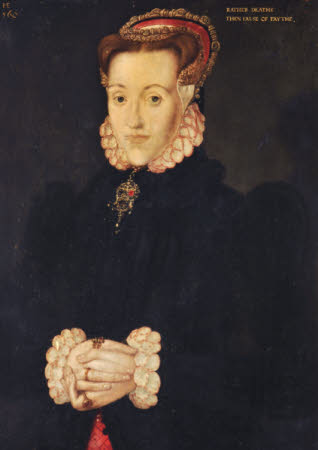


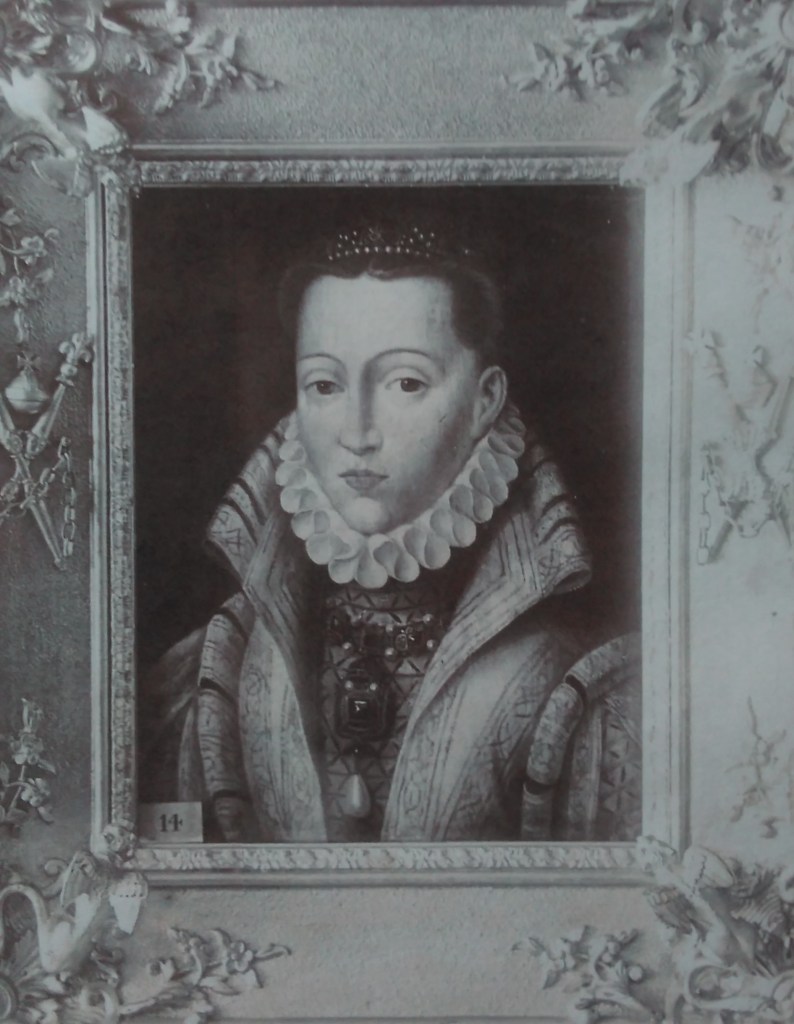
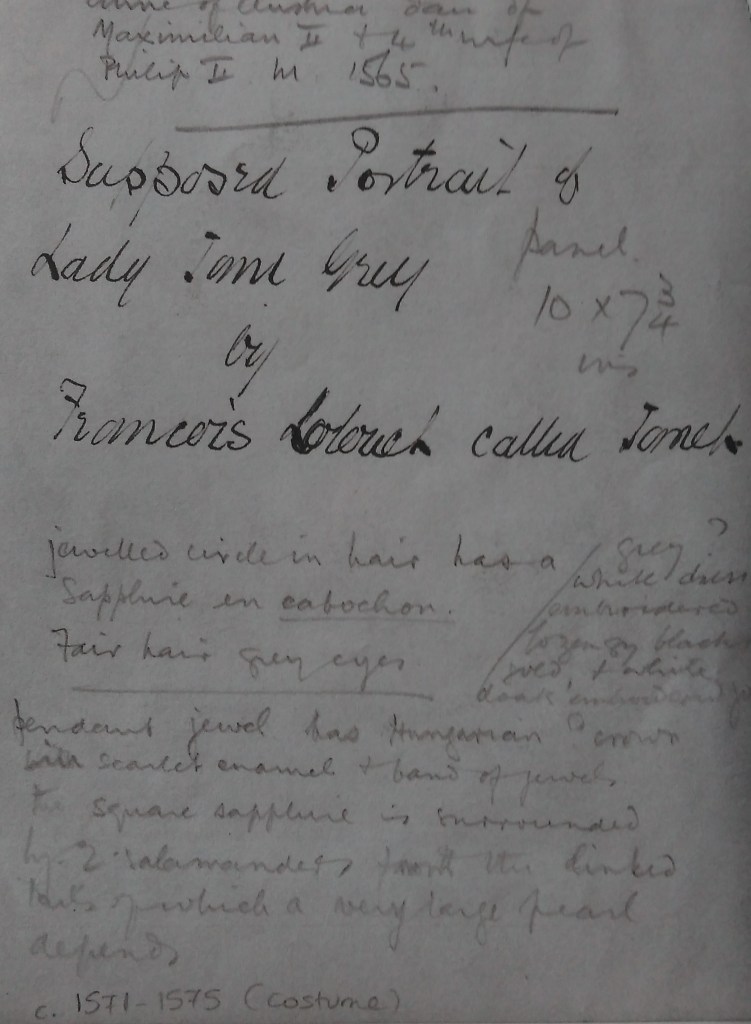


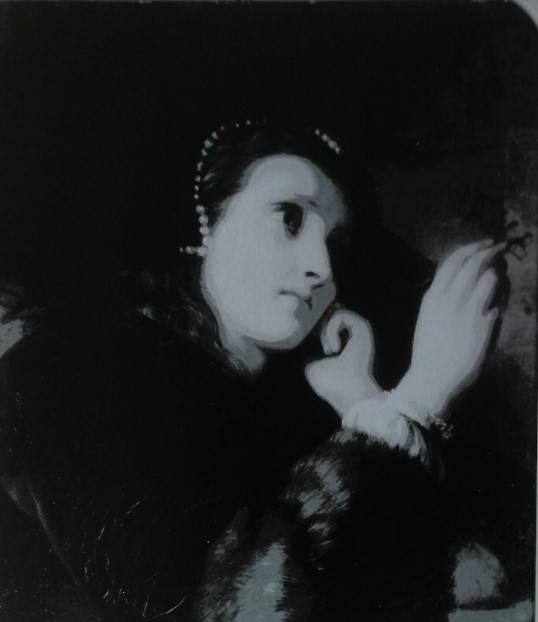
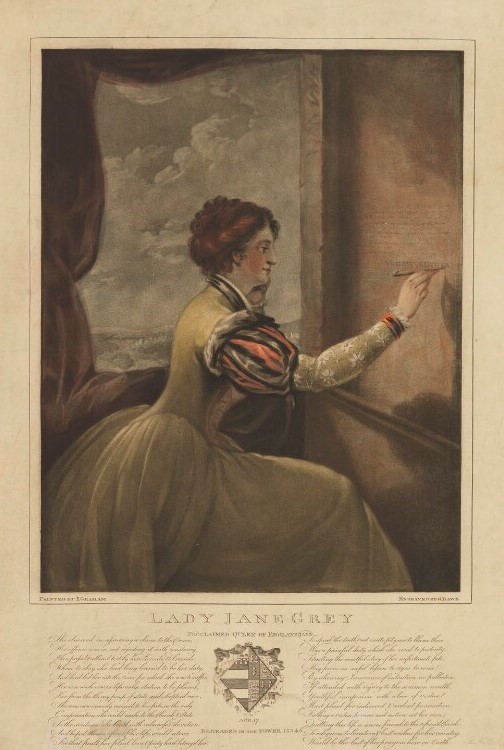
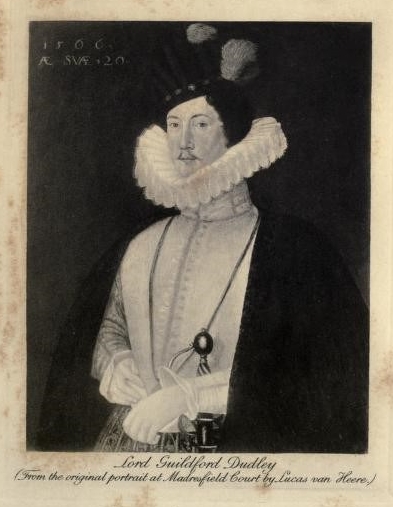

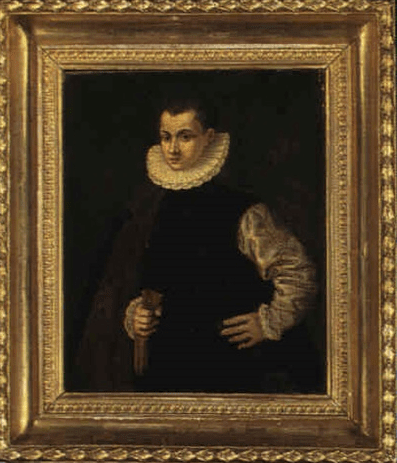
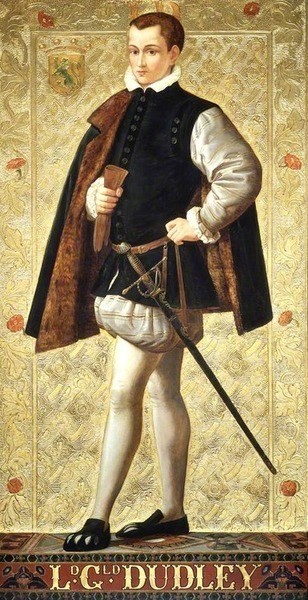

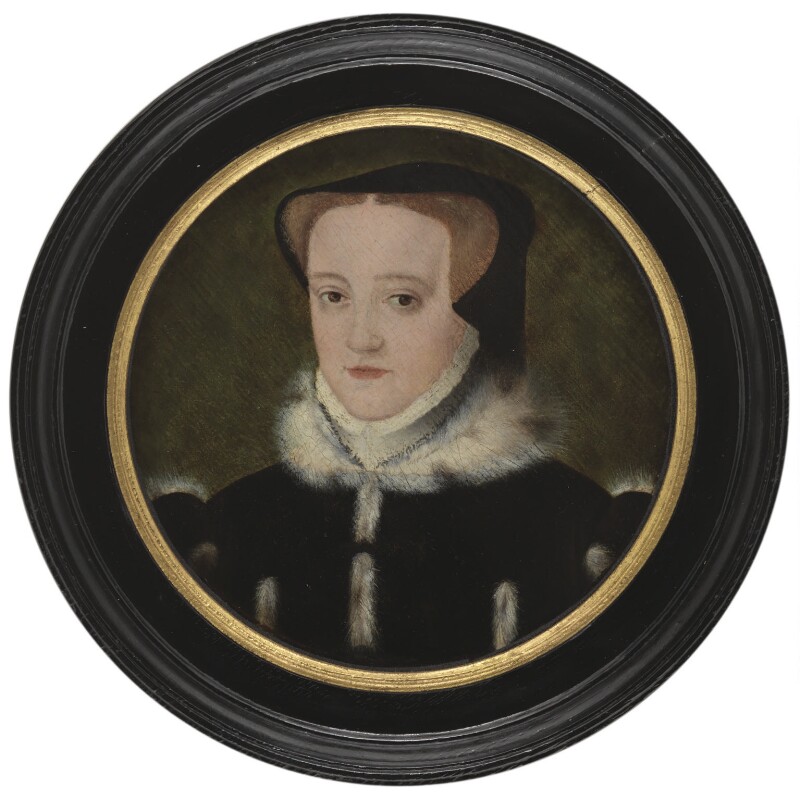


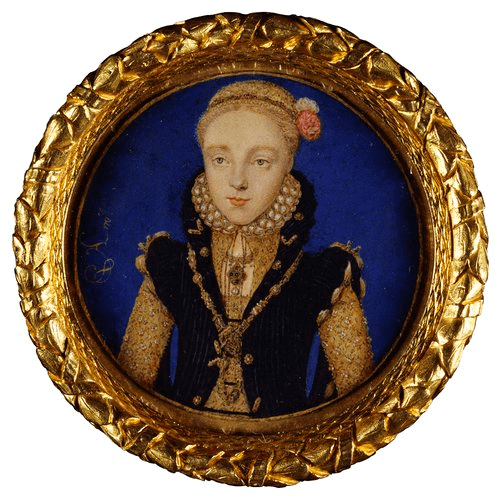


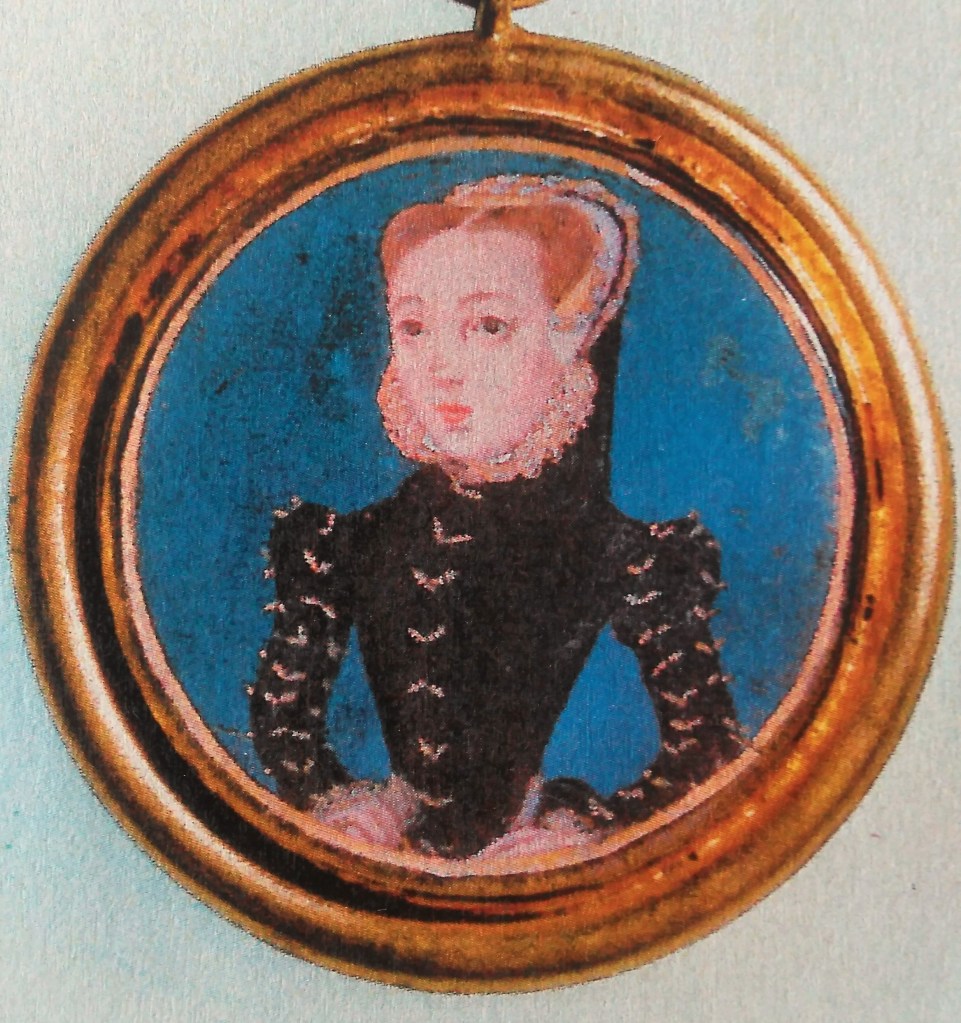
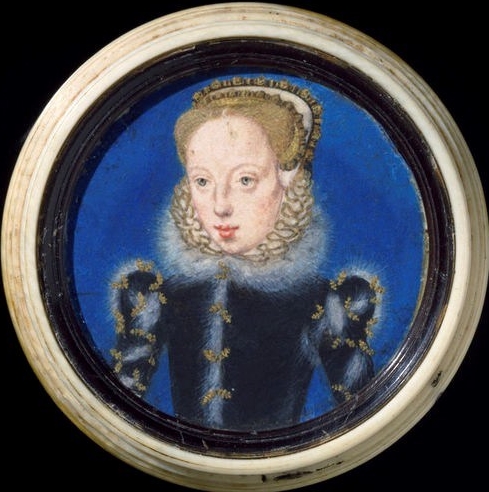
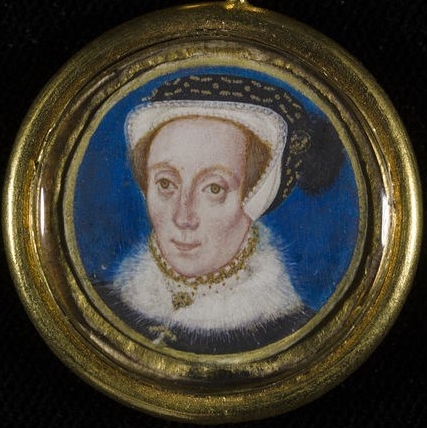
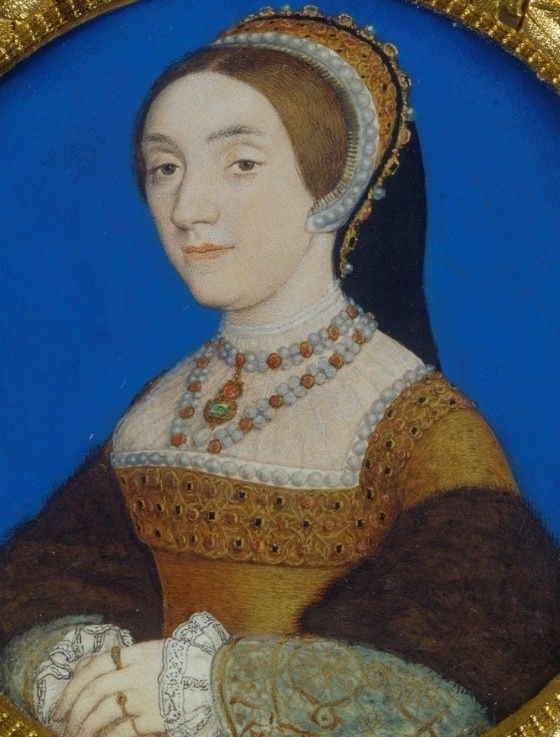


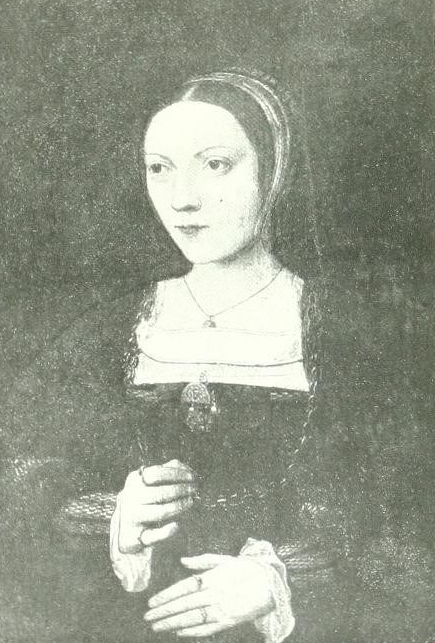


 Lady Jane Grey Revisited